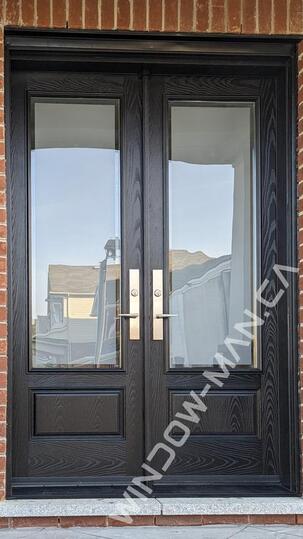



Double doors are beautiful — but they’re rarely the best insulated part of your home. Wide slabs, a center seam, glass inserts, and shifting frames all create ways for heat to escape and cold to creep in. Even on newer units, drafts around the frame or through the astragal aren’t uncommon.
So if your entry looks great but feels cold? This guide is for you. Whether you’re trying to cut energy bills or just want to stop that cold breeze near your foyer, here’s how to insulate double front doors properly — without bulky fixes or ugly foam tape slapped everywhere.
Key Takeaways
- Insulation issues often start at the center seam — upgrade or reseal the astragal.
- Weatherstripping and door sweeps go a long way in stopping drafts.
- Glass inserts should be double-glazed or low-E for thermal performance.
- Check behind trim and around the threshold — small gaps lead to big heat loss.
- Temporary fixes like thermal curtains or draft stoppers can help in the short term.
- Insulation won’t solve a warped frame or flexing passive door — in some cases, replacement is the smarter option.
Why Insulation Matters for Exterior Double Doors
You don’t need to live in Canada to feel the difference a leaky door makes. Poor insulation around double doors can lead to:
- Drafts and cold spots in the home (especially near open-concept entryways)
- Higher energy bills, as heating or cooling works overtime
- Moisture buildup if warm air hits cold surfaces
- Premature wear on hardware and frames due to temperature shifts
Double doors add complexity. There's a center meeting point. One panel (the passive door) may not seal perfectly. And many come with glass inserts — beautiful, but not always thermal-friendly.
The good news? You don’t need to replace the whole unit. Most insulation fixes are subtle — and some can even be done in a single afternoon.
For context on how double doors work and their anatomy, see the what is a double door article.
Signs Your Double Front Doors Are Poorly Insulated
You can usually feel it before you see it. But here’s what to look for:
| Sign | What It Means |
| Cold air near the seam | Poor astragal or flush bolt seal |
| Light coming in around the frame | Weatherstripping has worn down |
| Condensation on glass or nearby walls | Glass isn’t insulated or edges are leaking |
| Floor feels cold near threshold | Poor seal or thermal bridging at sill |
| Doors feel “drafty” even when locked | Passive door isn’t flush or flexes |
Tip: Push gently on the passive door from the outside. If it moves, it’s leaking air.
How to Insulate Double Doors: Step by Step
1. Seal the Meeting Edge (Astragal)
Start at the seam where the two doors meet. If your astragal strip is loose, cracked, or missing — replace it. Look for spring-loaded or compression astragals that adapt to slight movement.
Still getting air through the middle? Add a thin foam backer rod behind the astragal or upgrade to an overlapping astragal with built-in weatherstripping.
2. Upgrade Weatherstripping Around the Frame
Use closed-cell foam or silicone strips along the top and sides of the frame. Make sure:
- The adhesive sticks to a clean, dry surface
- The doors compress the strip when shut, but don’t bulge or resist closing
3. Add a Door Sweep or Threshold Gasket
At the bottom of the active door, install a door sweep that brushes or compresses against the sill. If the threshold is worn, you may need to install a new one with an integrated gasket.
4. Check the Glass
If your doors have large glass inserts, make sure it’s double-glazed or low-E. If it’s single-pane or outdated, consider applying plastic window film kits in winter or replacing with insulated inserts later on.
5. Fill Gaps Behind Trim
Sometimes the cold comes from deeper than the frame. Remove interior casing and look behind — if you see daylight or feel cold air, fill with low-expansion spray foam or backer rod + caulk.
Sealing comes first — before insulation. See how to seal double doors for step-by-step guidance.
Let’s talk it through
Styles, colors, installation — I’ll help you get it right
Temporary or Budget-Friendly Options
If you rent, or just want a seasonal fix, try these:
- Thermal curtains or magnetic door covers for overnight insulation
- Draft stoppers or weighted door snakes along the bottom
- Removable clear plastic film on glass panels
- Reflective insulation rolls (like bubble foil) cut to shape behind door blinds
These aren’t forever fixes — but they can make a big difference during winter months.
When Insulation Isn’t Enough
If you’ve done everything and the doors still feel cold, here’s what might be going on:
- The frame is out of plumb — making seals ineffective
- The passive panel flexes — letting air in even when “locked”
- The doors are hollow-core or cheap fibreglass kits — poor thermal mass
- Glass is single-pane — always a thermal weak spot
In these cases, replacing the unit or upgrading glass inserts may be the better long-term move — especially if you’re already renovating.
How to Insulate Double Doors Without Sacrificing Style
Even the best double doors need sealing and insulation love — but that doesn’t mean compromising on looks. Most of the insulation techniques above are invisible once done right. You’ll still get the wide, light-filled entry you love — just without the chill.
Need professional door installation? Send us a photo of your current setup — we’ll walk you through everything you need.